

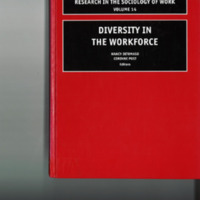
Diversity in The Workforce
Title
Diversity in The Workforce
Description
Increasing diversity in the workforce has several sources: (a) the changing demographics of the structure of the U.S (b) the increased importance of globalization to profits and long-term survival in many companies, and (c) changes in the structure of how work gets done. People bring with them into organizations the behavior patterns and thinking, networks, social pressures, habits, and strategies of action they learned before joining the organization. Further, people are shaped by the perceptions, attitudes, and behaviors of others in regard to them. Although many organizations in the past have tried to homogenize behavior and attitudes by developing their own organizational cultures, the reality in most organizations is the existence of subcultures and microcultures, as each group tries to find its own place, often in competition with others. This volume of the sociology of work addresses a number of issues that are brought to the fore because of diversity in the workforce: the structure, impact, and mechanisms of social networks; the policies and political dynamics around trying to redistribute benefits among social groups; issues regarding work and family, especially for professional workers in male dominated jobs; and the link between diversity in the workforce and broader issues of inequality. This set of papers address much of the emerging empirical and theoretical work in the study of diversity in the workforce and creates an agenda for future work in the area.
Creator
Nancy Ditomaso and Corinne Post.
Publisher
JAI, Elsevier
Date
2004
Format
PDF
Language
English
Original Format
Paper
Files
Collection
Citation
Nancy Ditomaso and Corinne Post., “Diversity in The Workforce,” NCI Archive, accessed October 15, 2026, https://archive.ncirl.ie/items/show/1192.